Cultivating Resilience: How the Nanaji Deshmukh Krishi Sanjivani Prakalp is Transforming Maharashtra’s Heartland
In the vast, semi-arid stretches of Maharashtra, agriculture has always been more than just an occupation; it is a way of life, a cultural backbone, and a constant gamble against the elements. For decades, farmers in the Marathwada and Vidarbha regions have faced a mounting crisis fueled by erratic monsoons, soil degradation, and the harsh realities of climate change.
PM Kisan 22nd Installment Date Finalized: Check Status & List
Discover how the Nanaji Deshmukh Krishi Sanjivani Prakalp (PoCRA) is revolutionizing agriculture in Maharashtra. This comprehensive guide explores climate-resilient farming, digital subsidies, and the sustainable strategies helping smallholder farmers thrive despite climate change.
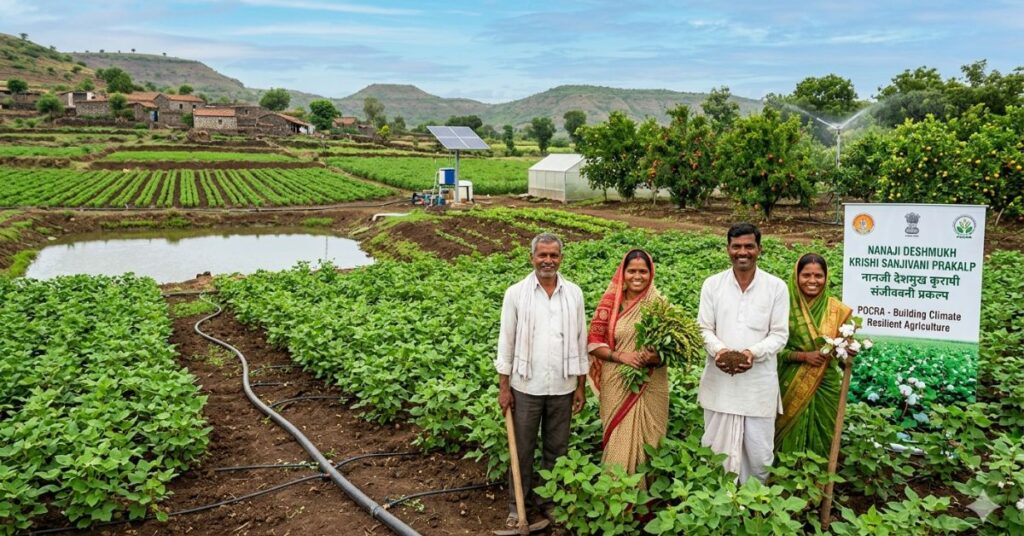
Enter the Nanaji Deshmukh Krishi Sanjivani Prakalp (NDKSP)—also known as the Project on Climate Resilient Agriculture (PoCRA). Named after the legendary social activist and Bharat Ratna awardee Nanaji Deshmukh, this ambitious initiative is not just a government scheme; it is a blueprint for survival and prosperity in an era of environmental uncertainty.
The Vision: Why Climate Resilience Matters
The traditional “Green Revolution” model focused heavily on maximizing yields through intensive irrigation and chemical inputs. However, in regions where groundwater is scarce and the rain is unpredictable, that model is breaking down.
The NDKSP, a collaborative project between the Government of Maharashtra and the World Bank, shifts the focus. With a total budget of roughly ₹4,000 Crores, its primary objective is to enhance the climate resilience and profitability of smallholder farmers across 15 districts.
The project recognizes a hard truth: we cannot control the weather, but we can change how the soil, the water, and the farmer respond to it.
The Four Pillars of the Project
The success of the Nanaji Deshmukh Krishi Sanjivani Prakalp rests on four critical pillars designed to create a holistic ecosystem for the rural community.
1. Soil Health and Moisture Conservation
The foundation of any farm is its soil. NDKSP promotes practices that treat the farm as a living sponge. By encouraging Zero Tillage, Mulching, and the use of Green Manure, the project helps farmers retain every drop of rainwater within the soil profile.
- Carbon Sequestration: Healthy soil absorbs more carbon, helping mitigate the very climate change that threatens these farms.
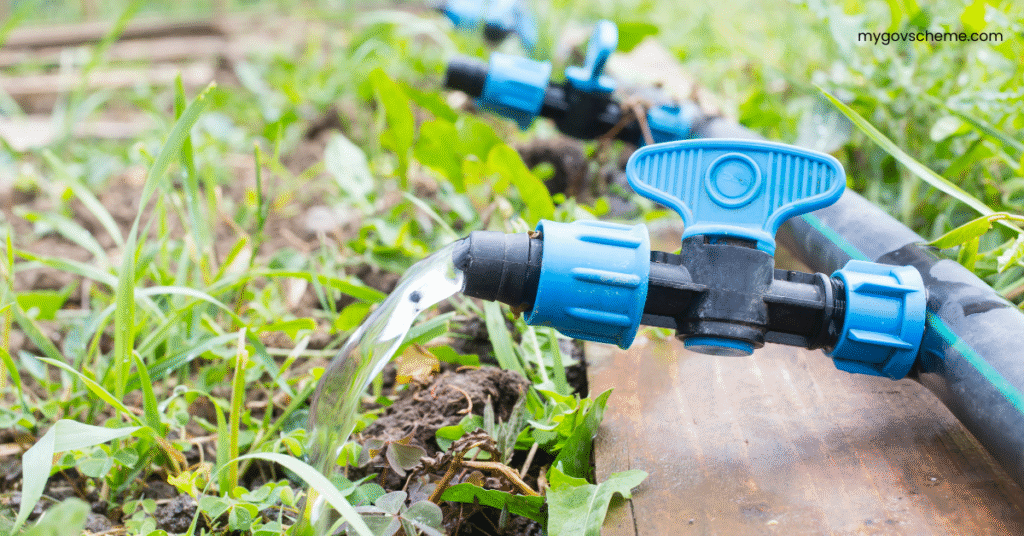
- Micro-irrigation: The project provides heavy subsidies for Drip and Sprinkler systems, ensuring that “more crop per drop” isn’t just a slogan, but a daily reality.
2. Seed Diversity and Climate-Resilient Crops
Traditional varieties often struggle with the heatwaves and dry spells that have become common in Maharashtra. NDKSP introduces short-duration crop varieties and drought-tolerant seeds. By diversifying from water-intensive crops like sugarcane to pulses and oilseeds, farmers can ensure a harvest even if the monsoon is shorter than expected.
3. Water Security through Watershed Management
Individual farm success is tied to the community’s water table. The project invests heavily in:
- Compartment Bunding: To prevent soil erosion.
- Farm Ponds: Acting as “water banks” for emergency irrigation during dry spells.
- Restoration of Old Malguzari Tanks: Reviving traditional water structures that have served the community for centuries.
4. Post-Harvest Management and Market Linkages
A bumper crop is useless if it rots in the sun or is sold at a loss to middlemen. NDKSP empowers Farmer Producer Organizations (FPOs) and Self-Help Groups (SHGs). By funding small-scale processing units, warehouses, and cold storage, the project ensures that farmers can add value to their produce and sell when the market price is right.
Digital Empowerment: DBT and the ‘DBT-PoCRA’ App
One of the most revolutionary aspects of the NDKSP is its transparency. Historically, government subsidies were often mired in red tape. The DBT-PoCRA (Direct Benefit Transfer) portal has changed the game.
Farmers can apply for benefits—ranging from seeds and tools to goat-rearing sheds—directly through a mobile app. The process is geotagged and Aadhaar-linked, ensuring that the funds reach the intended recipient without leaks. This digital leap has instilled a new sense of dignity and trust among the rural youth, who now see agriculture as a modern, tech-enabled profession.
Inclusion: Focusing on the Marginalized
The Nanaji Deshmukh Krishi Sanjivani Prakalp is intentionally designed to be inclusive. A significant portion of the project’s resources is earmarked for:
- Small and Marginal Farmers: Those holding less than 2 hectares of land.
- Women Farmers: Recognizing that women do the bulk of the agricultural labor, the project provides specific incentives for women-led FPOs and animal husbandry projects.
- Landless Laborers: By promoting allied activities like poultry, goat-rearing, and apiculture (beekeeping), the project provides a safety net for those who don’t own land but are vital to the village economy.
The Real-World Impact: Stories from the Field
In districts like Beed, Jalna, and Akola, the landscape is beginning to change. Farmers who once contemplated leaving their ancestral lands for urban slums are now seeing a future in their fields.
Take the example of a village in the Marathwada region that adopted the “Water Budgeting” approach promoted by NDKSP. By calculating exactly how much water the village has at the start of the season and choosing crops accordingly, they have managed to remain “tanker-free” even during deficit rainfall years.
Furthermore, the promotion of Integrated Farming Systems (IFS)—where a farmer combines crops with livestock and fruit trees—has provided a steady year-round income, shielding families from the volatility of single-crop failures.
The Path Forward: A Sustainable Legacy
The Nanaji Deshmukh Krishi Sanjivani Prakalp is more than a 6-year project; it is a movement toward “Baliraja” (the prosperous farmer). As we move deeper into the 21st century, the lessons learned here will serve as a template for other rain-fed agricultural regions across the globe.
However, the journey doesn’t end with government funding. The true success of NDKSP lies in its ability to foster community ownership. When a village committee decides how to manage its groundwater or when a group of women starts a processing unit for turmeric, the cycle of poverty begins to break.
Conclusion
The Nanaji Deshmukh Krishi Sanjivani Prakalp is a fitting tribute to its namesake. Nanaji Deshmukh believed that “Self-reliance is the only way to build a strong nation.” By equipping the farmers of Maharashtra with the tools, the technology, and the resilience to face a changing climate, this project is doing exactly that.
It is a story of hope etched into the black cotton soil of the Deccan. It is a testament to the fact that with the right blend of traditional wisdom and modern science, we can ensure that our farmers don’t just survive—they thrive.
Are you a farmer or an entrepreneur interested in PoCRA? Visit the official Maharashtra Government portal or download the DBT-PoCRA app to check your eligibility and join the revolution in climate-resilient farming.