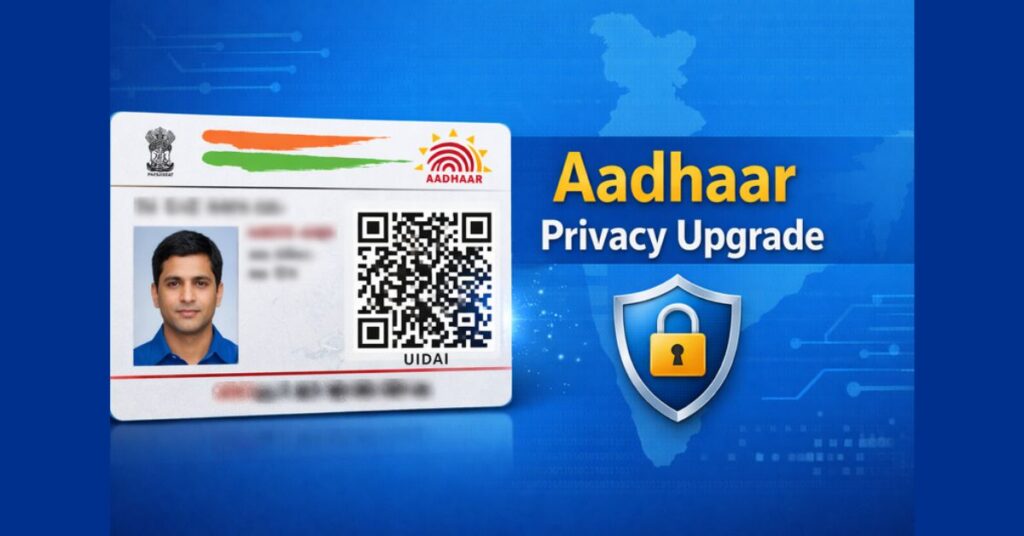
Aadhaar Card Update: Aadhaar to Reportedly Get a Major Privacy Upgrade with Photo and Secure QR Code
India’s digital identity ecosystem may soon see a significant privacy-focused transformation. According to recent reports, the Aadhaar card is expected to get a major privacy upgrade, where personal demographic details like full name, date of birth, and address may no longer be openly visible on the card. Instead, identity verification could rely primarily on a photograph and a secure, encrypted QR code. Aadhaar Card
This proposed change signals a strong shift toward data minimisation, enhanced user control, and better protection against misuse—something privacy advocates and citizens alike have been calling for. Government Schemes
Aadhaar card is reportedly set to receive a major privacy upgrade, where personal details may no longer be visible on the card. Instead, identity verification will rely on a photo and a secure QR code, enhancing data protection and preventing misuse. Digital India
New Aadhaar Privacy Update: Photo and Secure QR Code to Replace Visible Personal Details
Why a Privacy Upgrade Is Being Considered
Over the years, Aadhaar has become the backbone of identity verification in India—used for banking, telecom, government subsidies, travel, and more. While this widespread adoption brought efficiency, it also increased privacy risks. Personal Finance
Some of the major concerns include: India News
- Excessive sharing of personal data
- Photocopies of Aadhaar being stored by private entities
- Risk of identity theft and profiling
- Aadhaar numbers and details being exposed in data leaks
To address these issues, the Unique Identification Authority of India has already introduced features like Masked Aadhaar and Virtual ID (VID). The newly reported update appears to be the next logical step in strengthening Aadhaar privacy by design. Aadhaar card update
What Is the Proposed Aadhaar Privacy Upgrade?
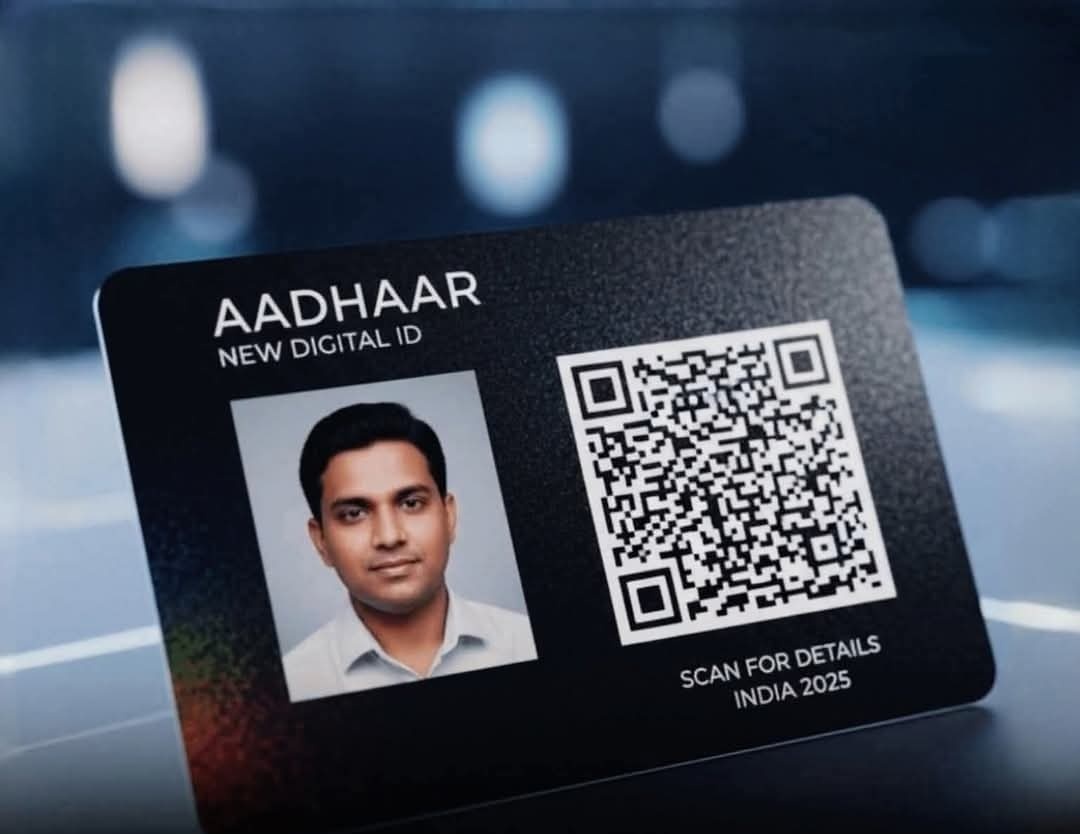
If reports are to be believed, the future version of Aadhaar may work very differently from the current physical or digital card. Aadhaar privacy upgrade
Instead of displaying full personal details, the card may include only:
- User photograph
- A secure, digitally signed QR code
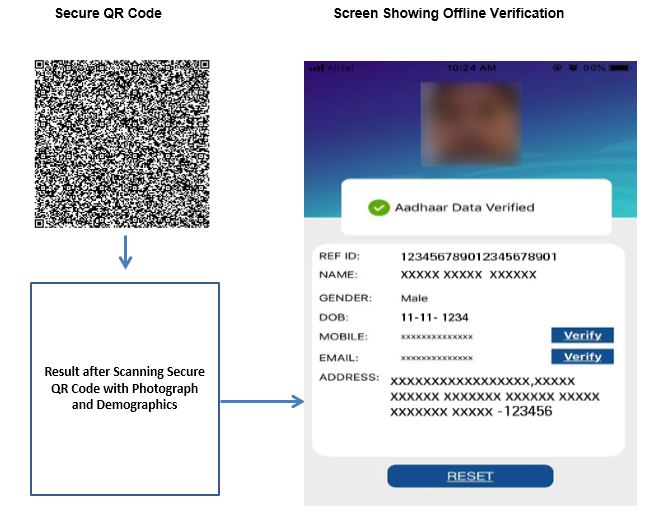
All other sensitive information would be embedded inside the QR code, encrypted and accessible only through authorised verification systems. Aadhaar QR code
In simple terms, no readable personal data would be visible to the naked eye. UIDAI Aadhaar news
How the Secure QR Code System Would Work
The secure QR code is not entirely new—UIDAI already uses QR-based verification—but the upgrade would make it the primary identity mechanism. Aadhaar new rules
Here’s how it may function: Digital identity India
- User presents Aadhaar (physical or digital)
- Verifier scans the QR code using an authorised app
- Encrypted data is decoded securely
- System confirms identity without exposing unnecessary details
The QR code may include:
- Name (encrypted)
- Date of birth or age band
- Gender
- Aadhaar number (partially masked or tokenised)
- Photograph
- Digital signature from UIDAI
Because the QR code is digitally signed, it cannot be forged or altered. Masked Aadhaar
Key Benefits of This Aadhaar Update
1. Stronger Privacy Protection
By hiding personal details from plain view, the risk of misuse drops significantly. Aadhaar verification
2. Reduced Data Sharing
Only need-based information will be shared during verification—nothing extra. Government ID update
3. Protection Against Identity Theft
Even if someone sees or copies the Aadhaar card, they won’t get readable personal data.
4. Faster and Safer Verification
QR-based verification is quick, accurate, and tamper-proof.
5. Compliance with Global Privacy Standards
This approach aligns with global principles like data minimisation and privacy by default.
What Happens to Existing Aadhaar Cards?
If the upgrade is officially rolled out, existing Aadhaar holders may not need to panic.
Likely scenarios include:
- Current Aadhaar remains valid
- Users may be encouraged to download updated e-Aadhaar
- Gradual transition instead of an overnight change
- Optional replacement of physical cards over time
UIDAI has historically ensured that Aadhaar changes are non-disruptive, so services linked to Aadhaar are expected to continue smoothly.
Impact on Banking, SIM Cards, and Government Services
A big question is how this change will affect Aadhaar-based services.
The good news is: most users may not notice any difference at all.
- Banks already use QR-based or biometric verification
- Telecom companies rely on e-KYC systems
- Government portals authenticate Aadhaar digitally
Since verification systems already read Aadhaar data electronically, hiding visible details on the card won’t affect backend processes.
How This Helps the Common Citizen
For everyday users, this update could be a game changer.
Imagine:
- No longer worrying about shops taking Aadhaar photocopies
- Less fear of address and DOB being misused
- More confidence in sharing Aadhaar only when absolutely necessary
This upgrade empowers citizens with greater control over their identity.
Link to India’s Digital Governance Vision
This move fits neatly into India’s broader digital governance goals under Government of India initiatives like:
- Digital India
- Secure Digital Identity
- Paperless and contactless services
By prioritising privacy, Aadhaar evolves from just an identity document into a privacy-aware digital credential.
Is This Upgrade Officially Confirmed?
As of now, this development is reported and widely discussed, but not formally notified through a detailed UIDAI circular.
However, given UIDAI’s past trajectory—Virtual ID, Masked Aadhaar, offline verification—the proposal appears highly plausible and technically feasible.
An official announcement is expected to clarify:
- Timeline
- Whether physical cards will change
- Whether updates will be mandatory or optional
What Should Aadhaar Holders Do Right Now?
Until official confirmation arrives, users can still take steps to protect their Aadhaar privacy:
- Use Masked Aadhaar wherever possible
- Share Aadhaar only with trusted entities
- Lock your Aadhaar biometrics via UIDAI portal
- Use Virtual ID instead of Aadhaar number
These measures already offer strong protection.
Final Thoughts
The reported Aadhaar privacy upgrade—replacing visible personal details with a photo and secure QR code—marks a bold and necessary evolution in India’s identity system.
In a world where data is as valuable as currency, protecting personal information is no longer optional. If implemented, this move could set a global benchmark for large-scale digital identity systems.
For millions of Aadhaar holders, it promises something invaluable: peace of mind.
As always, keep an eye out for official updates—but one thing is clear: Aadhaar is moving toward a more secure, privacy-first future.